Stereo · Phasing Sampler · iOS

What about phase?

Record a few seconds of anything — a clap, a word, a piano note — and run it through the tape processes of 1960s minimalism. Two channels start together, drift apart, and something you never played begins to play.

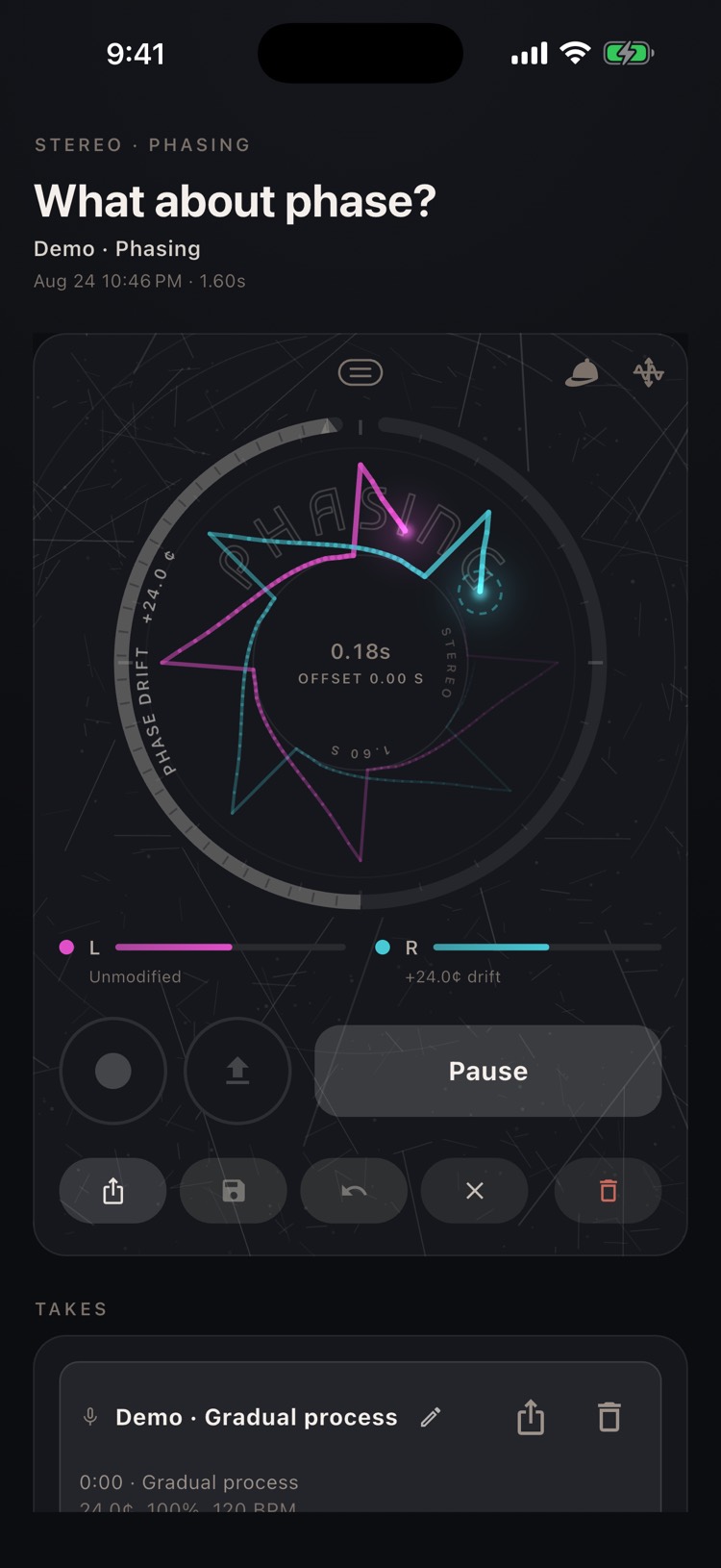
PHASE DRIFT   +24.0 ¢ WHAT ABOUT PHASE? 1.60 s OFFSET 0.00 S

L unmodified  ·  R +24.0¢ drift

Free 14-day trial · $0.99 unlock · no ads, no accounts

Process

Ten ways to take a loop apart. Each one is honest — what the wheel draws is what the speakers do. Every name below opens its page in What about math?

  1. 01Phasing
  2. 02Gradual process
  3. 03Tape loop multiplication
  4. 04Rhythmic construction
  5. 05Pattern substitution
  6. 06Resultant patterns
  7. 07Clapping Music
  8. 08Pulse / drone
  9. 09Canon
  10. 10Speech melody

How it works

Record a take

A few seconds is plenty. Takes are named after where you recorded them, if you allow location.

Choose a process

Set drift, tempo, amount. The wheel shows both channels; left is magenta, right is cyan.

Keep what returns

Save takes with their settings, and share the audio as a WAV when it becomes something.

On the wheel
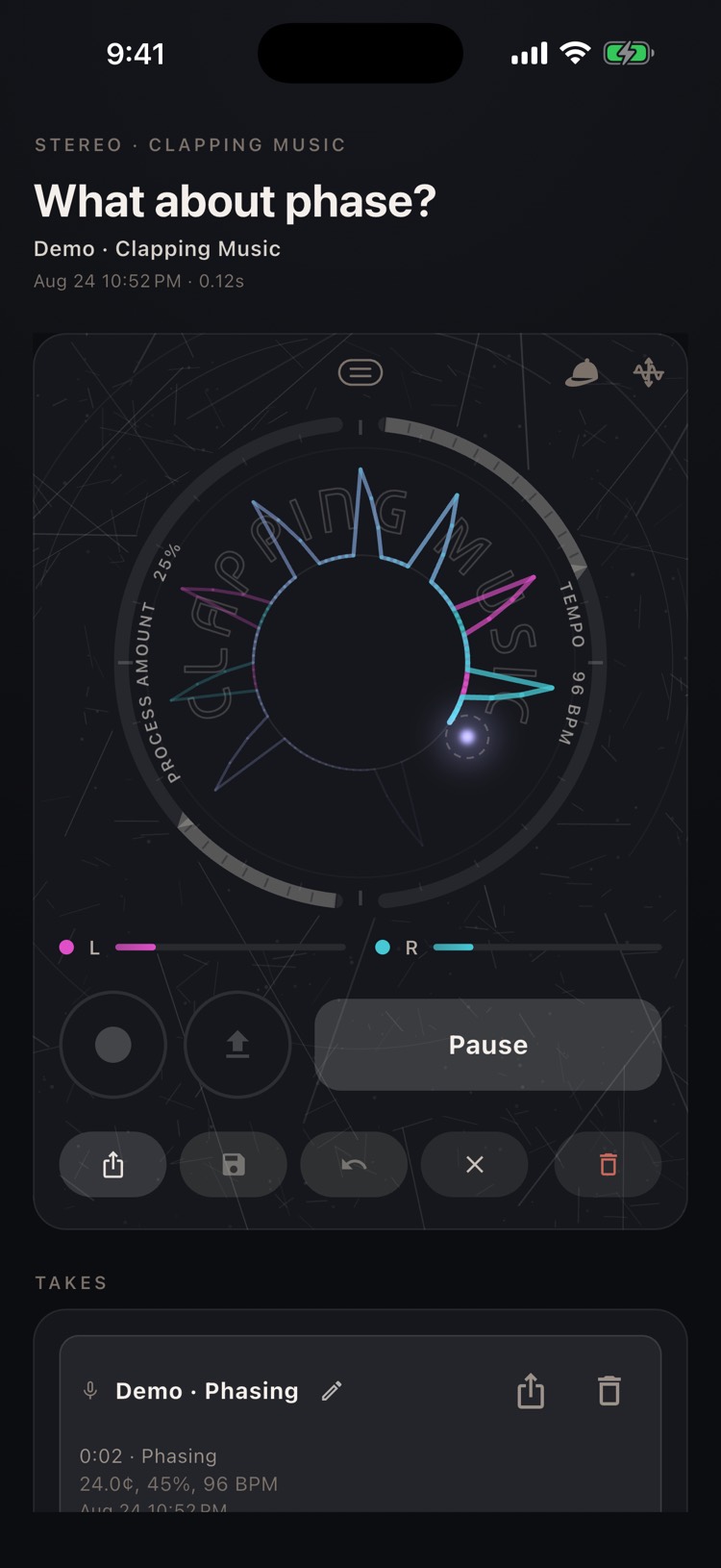
Clapping Music process: the two-hand pattern split across left and right rings
Clapping Music · two hands
The phasing demo playing: two spiky rings, magenta and cyan, drifting on the wheel display
Phasing · demo take

Nothing to read first

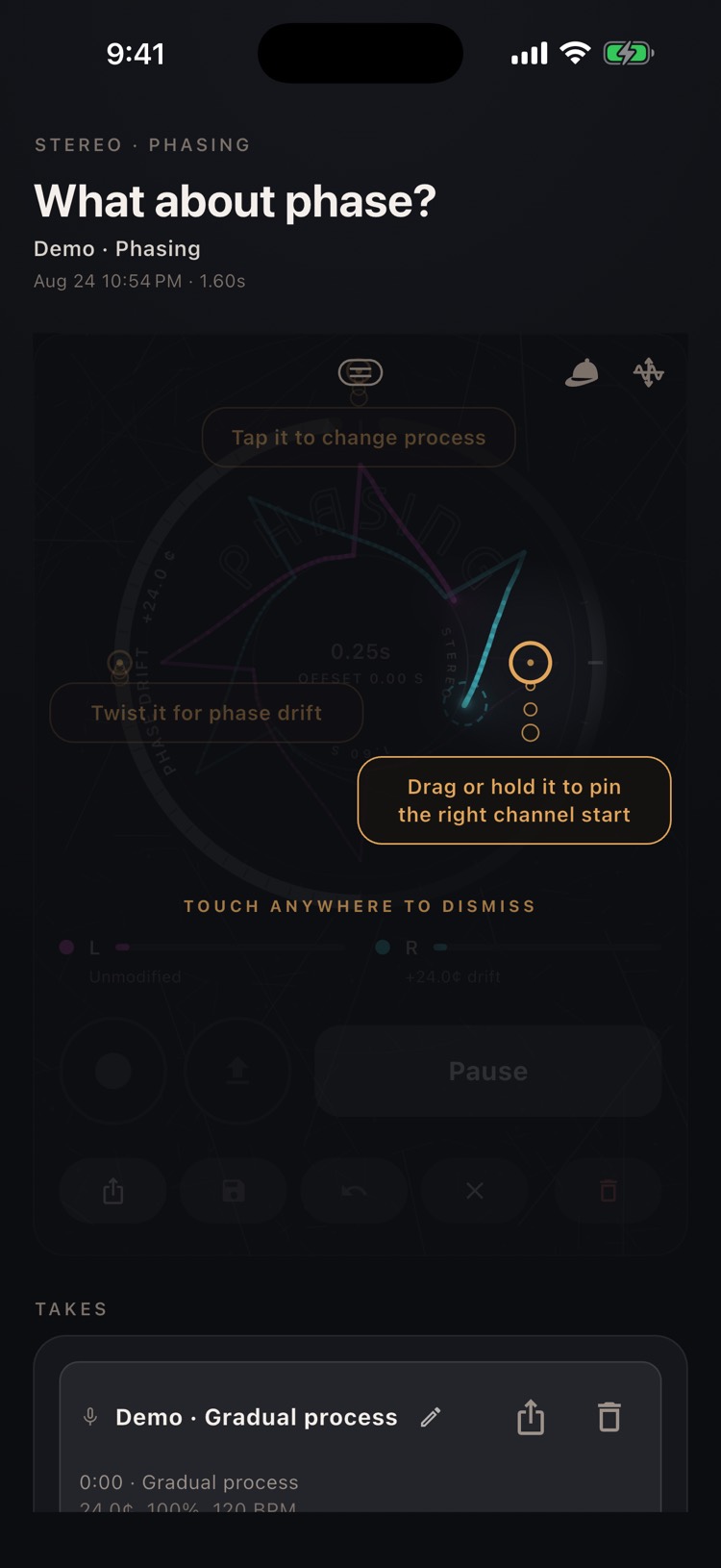
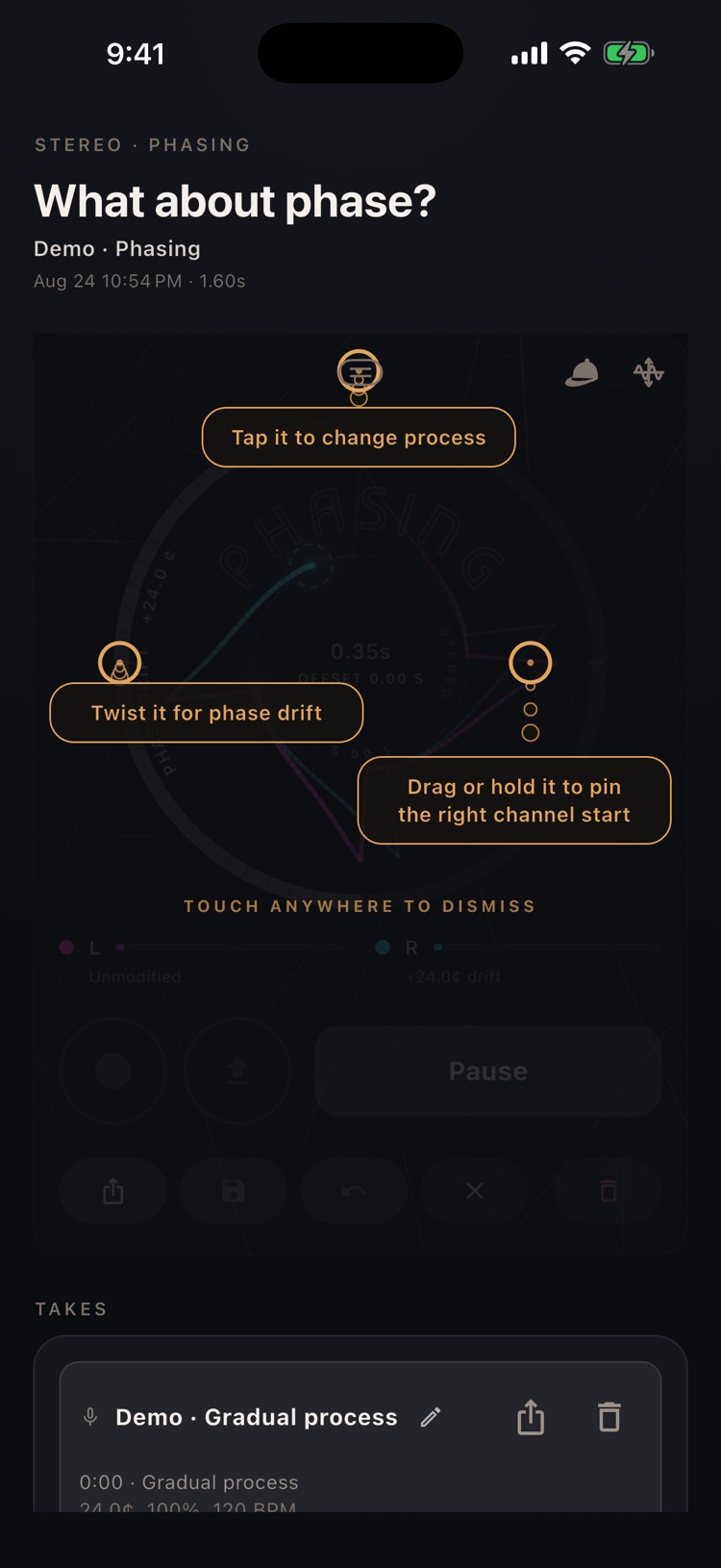
Almost nothing on the wheel is labelled — a ring you twist, a record you spin, a playhead you take hold of. So on first run it names its own parts, over the live wheel, without stopping the demo.

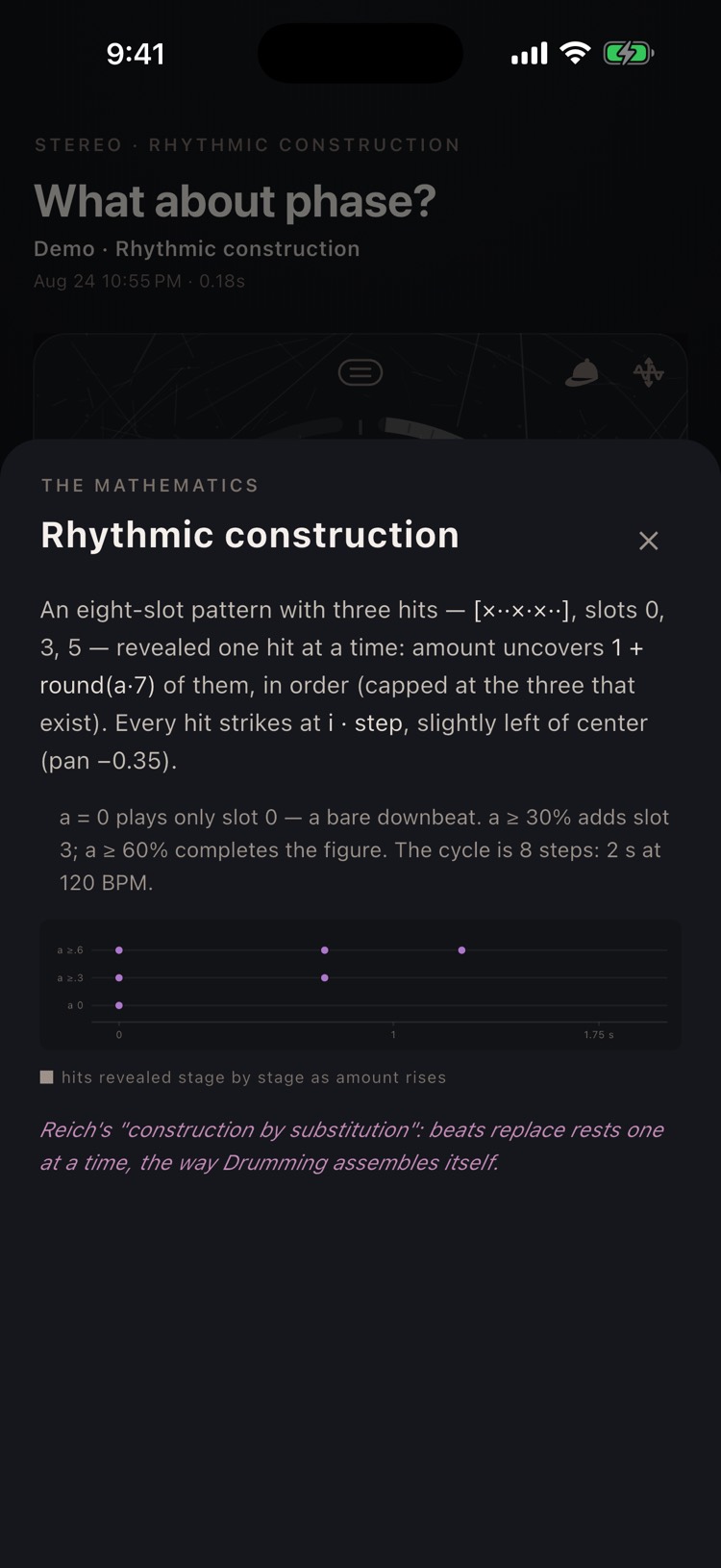
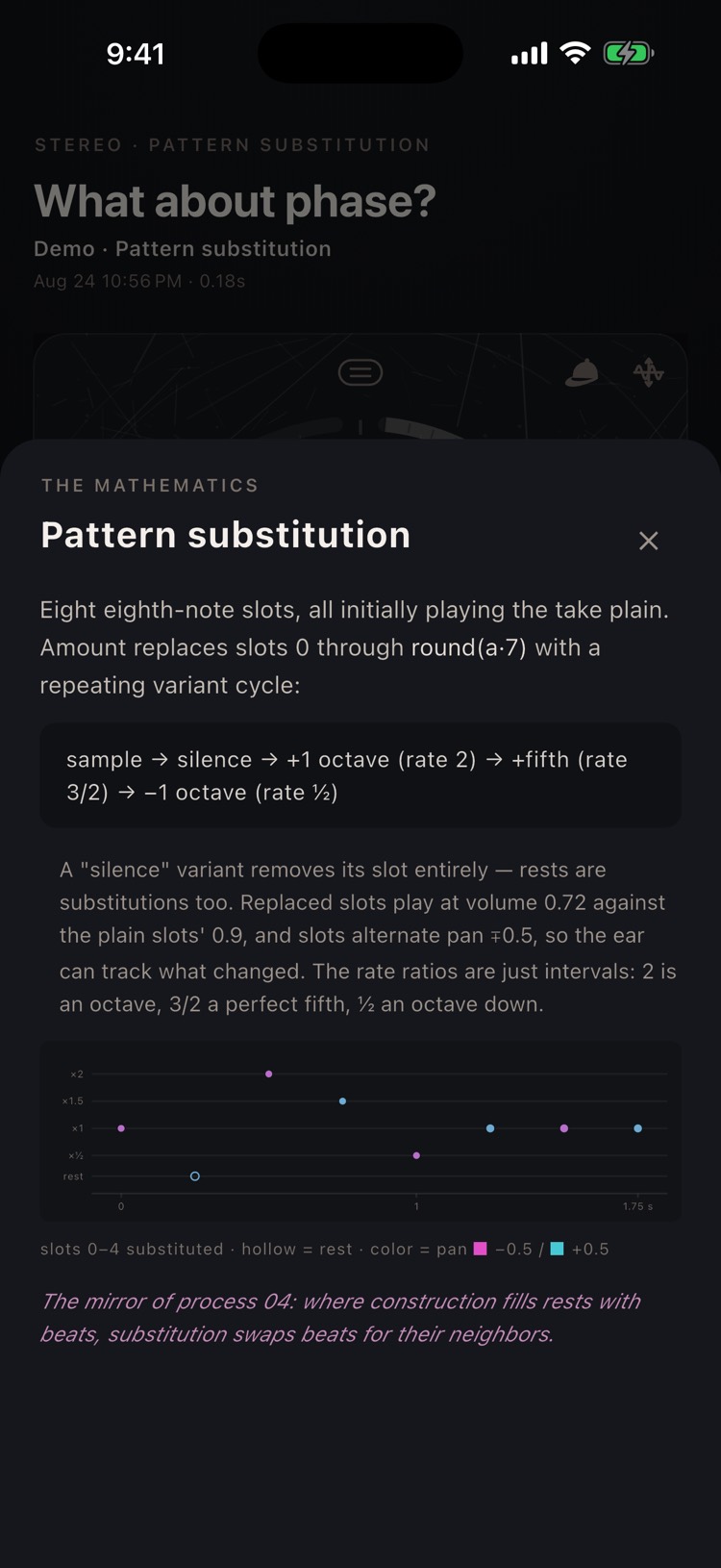
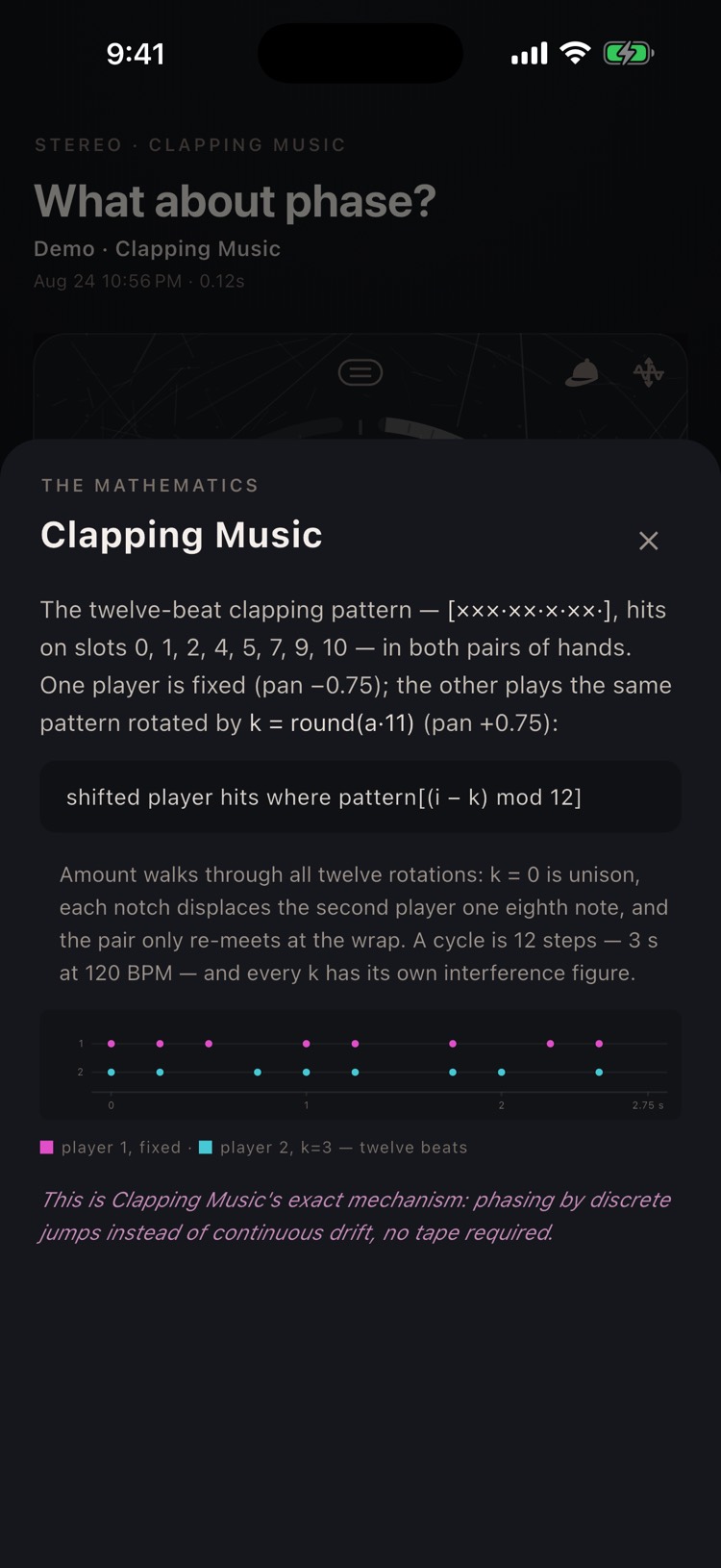
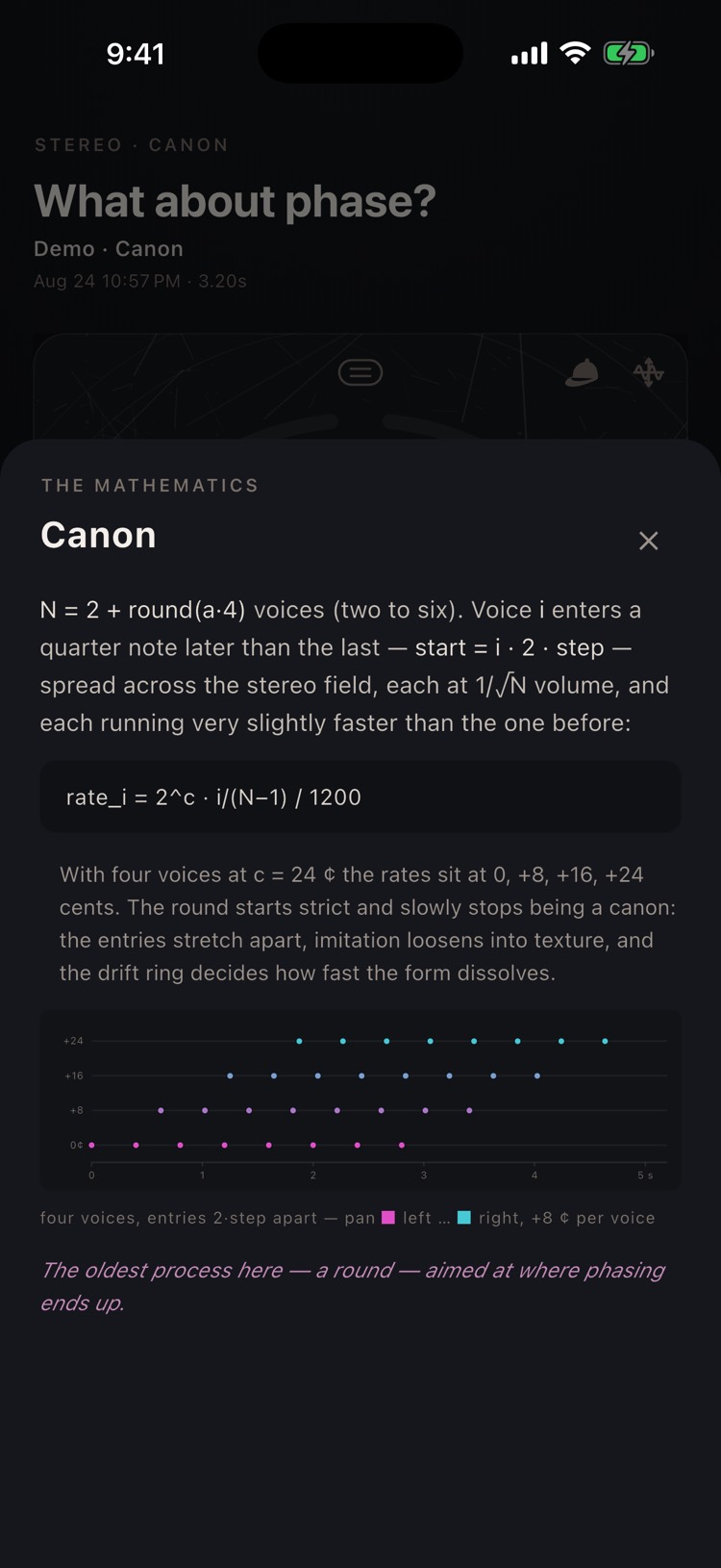
The coach cap in the card's corner brings it back, and it only ever names controls the loaded process actually has. Beside it, the wave opens that process's algebra, charts and all — this site's maths page, generated into the app. The plots are not redrawn there either: the app replays the marks this page's own script produces, so the two cannot drift apart.
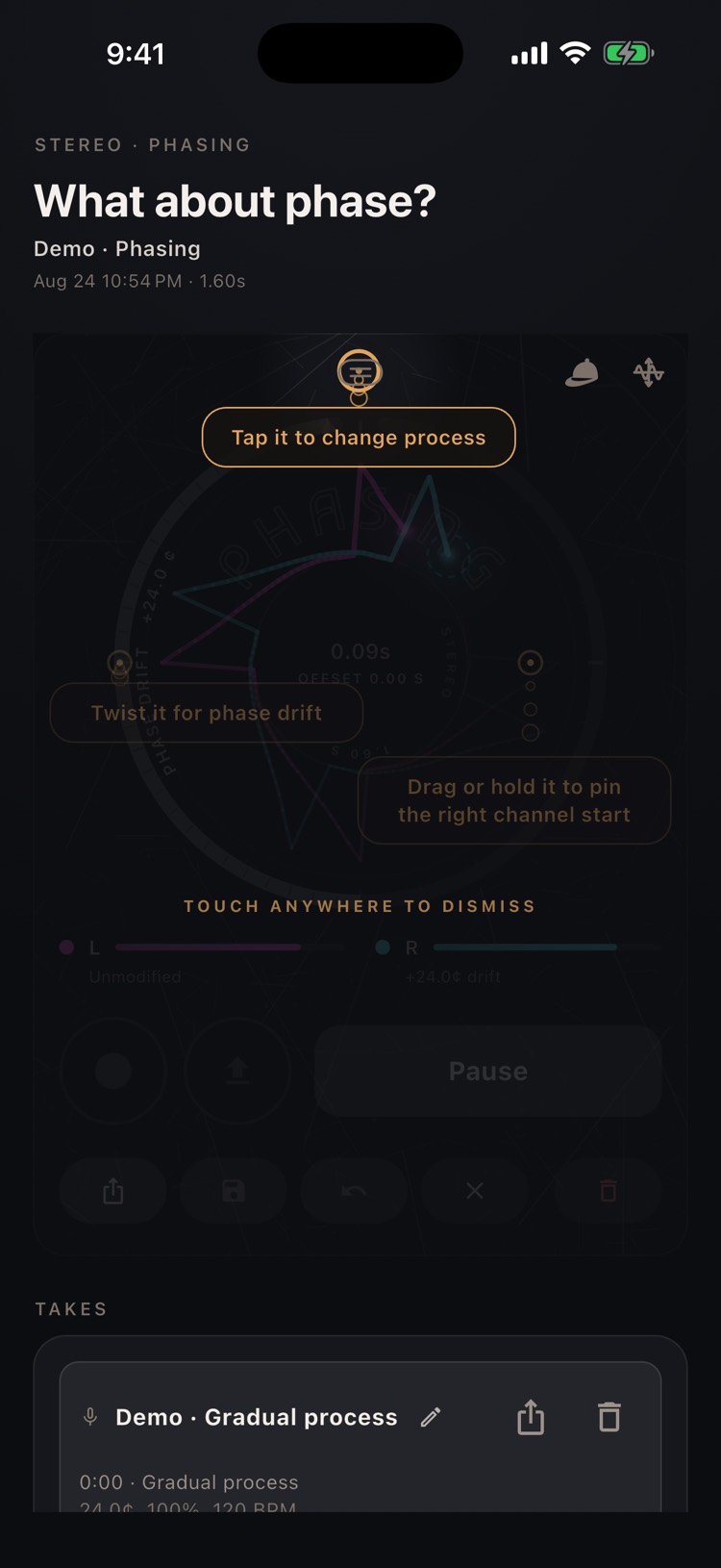
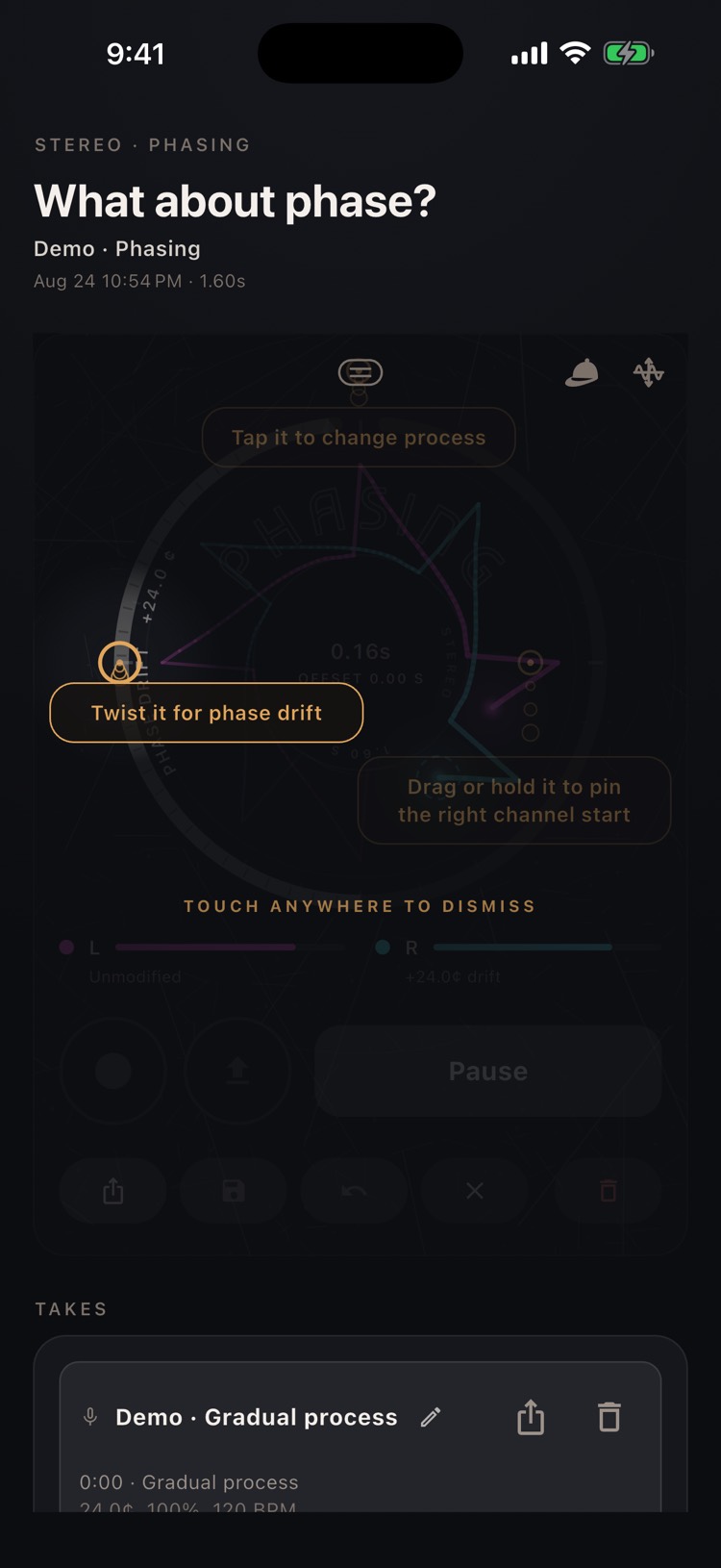
The wheel dimmed on first run, three amber notes naming its parts, each tied by a trail of beads to the control it names
First run · one part at a time
The maths sheet for Rhythmic construction: the pattern in
                  prose, a worked example, and a plot of the hits appearing
                  stage by stage
The wave · every process, its own algebra

Price

Free for 14 days. Then $0.99, once.

The trial includes everything. After it ends, playback stays free forever — demos, your saved takes, every process and control. The one-time unlock keeps recording new takes and sharing. No subscription, no ads, no accounts.

Where “phase” comes from

In 1965, the composer Steve Reich was working with a tape recording of a street preacher known as Brother Walter, caught mid-sermon on the phrase “it’s gonna rain.” Reich cut the phrase into a loop and set it running on two tape machines at once, meaning to keep them in unison.

No two tape decks run at exactly the same speed. The loops drifted apart, fell out of sync, swung back into alignment, then drifted apart again — an accident Reich named phasing and spent the rest of the decade turning into a technique, from “It’s Gonna Rain” and “Come Out” through “Piano Phase,” “Violin Phase,” and “Clapping Music.”

“What about phase?” is an independent app inspired by that lineage of tape and phase music. It has no affiliation with, and is not endorsed by, Steve Reich or his publishers.